
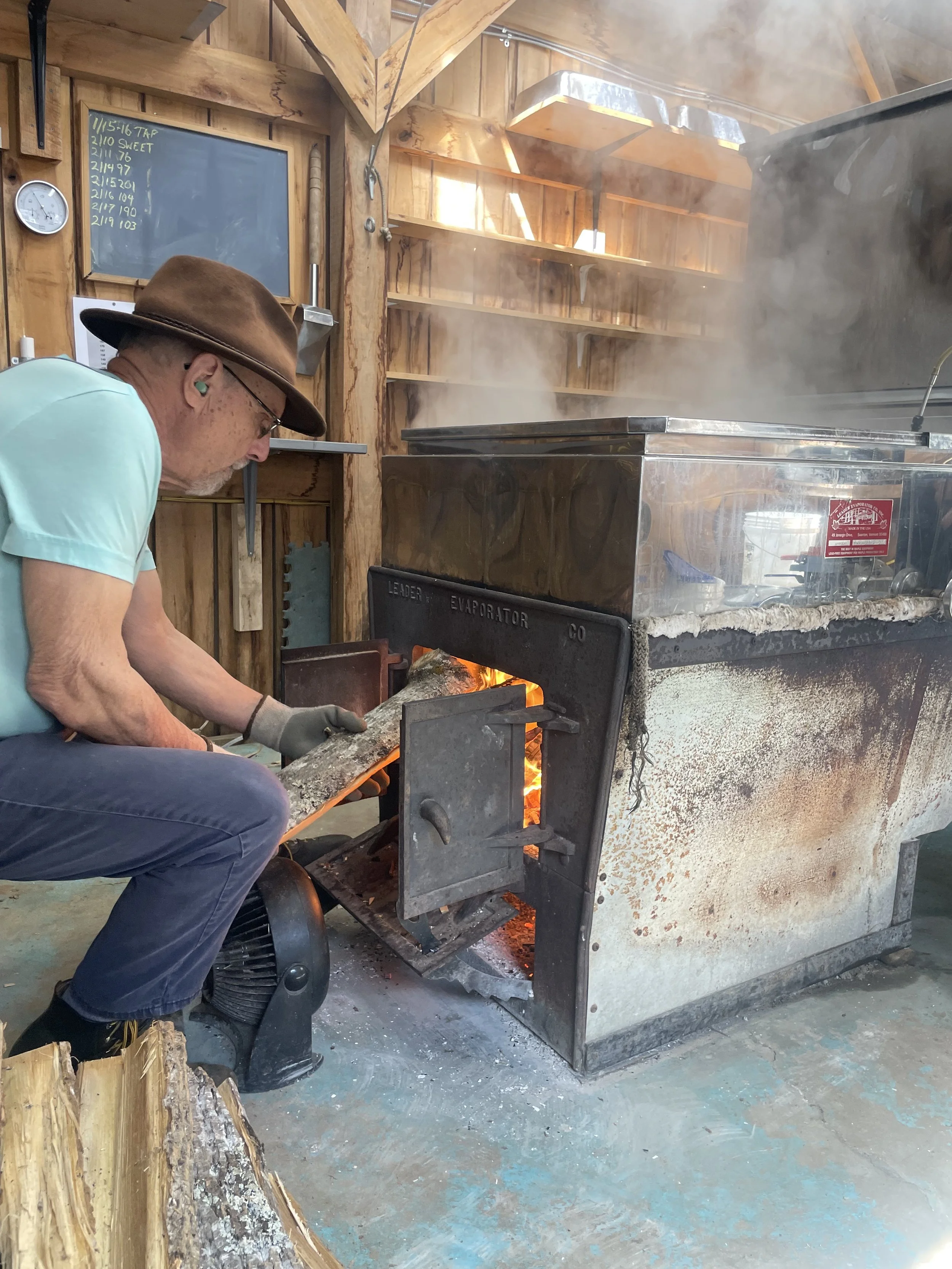
Doug stoking the evaporator.
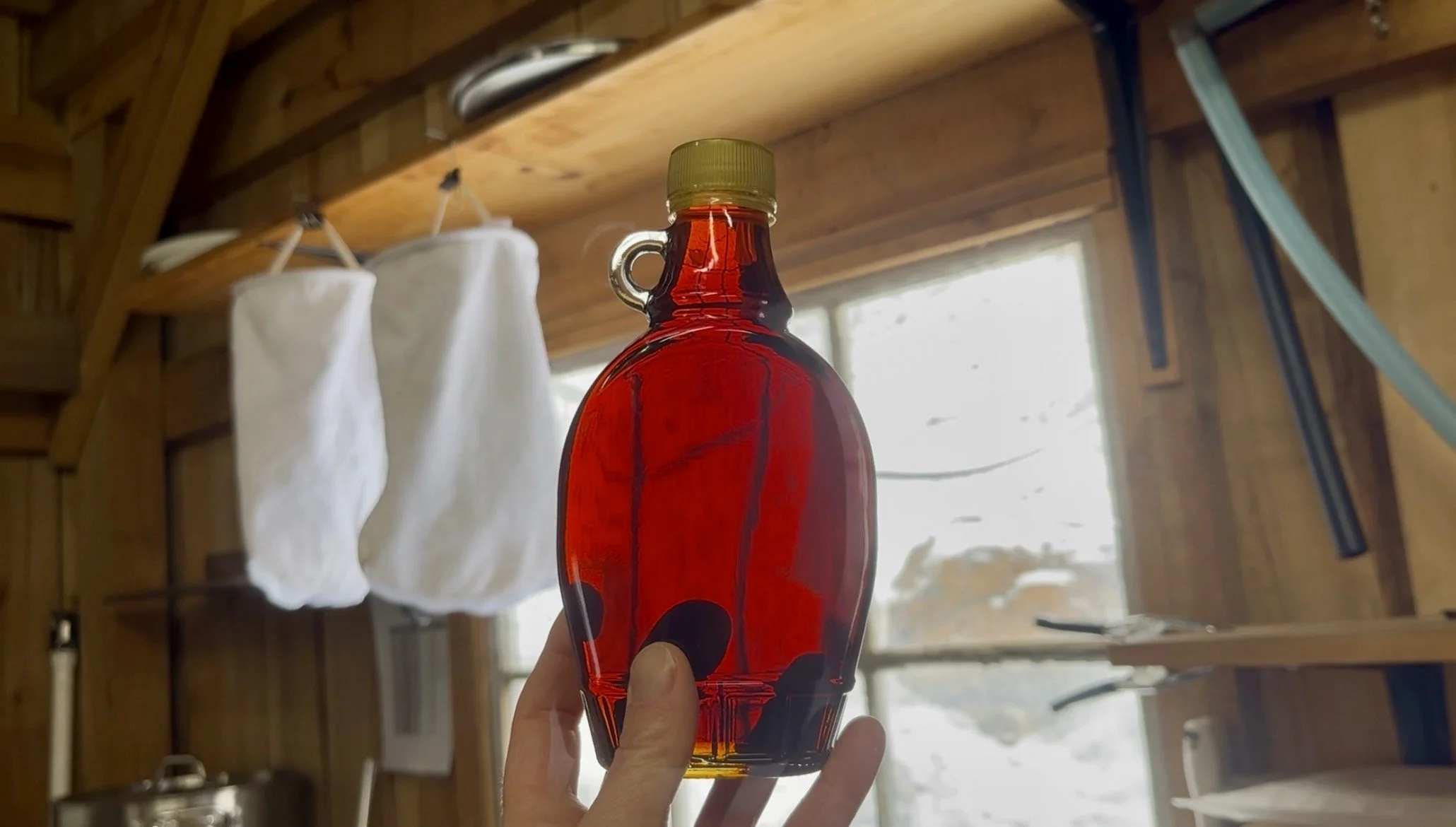
After a slow, cold start to our season, the weather has finally tipped in our favor and the sap has been flowing. In the past two weeks we’ve collected an estimated 3,000+ gallons of sap and have boiled that down to about 50 gallons of syrup so far.
It was tough sitting on our hands during the deep freeze earlier this month, but our reward has been an epic sap run in the resulting thaw. When the ground is deeply and thoroughly frozen, it takes time to soften. That slow thaw over many days results in an extended sap run and higher yields.
Weather like this has us pondering what it might be like to be sugar farmers in northern climes. Sap runs depend on freeze/thaw cycles. Here in the South, we hope for a freeze so that a subsequent thaw will provoke the flow. In the North, it’s often so cold that sugarers are hoping for a thaw between ongoing freezes. This winter, having such a large run after our prolonged, deep freeze has us considering just how much bigger the sap runs likely are in northern forests — and how tenuously we are perched on the southern edge of where sugaring is even possible, let alone practical.
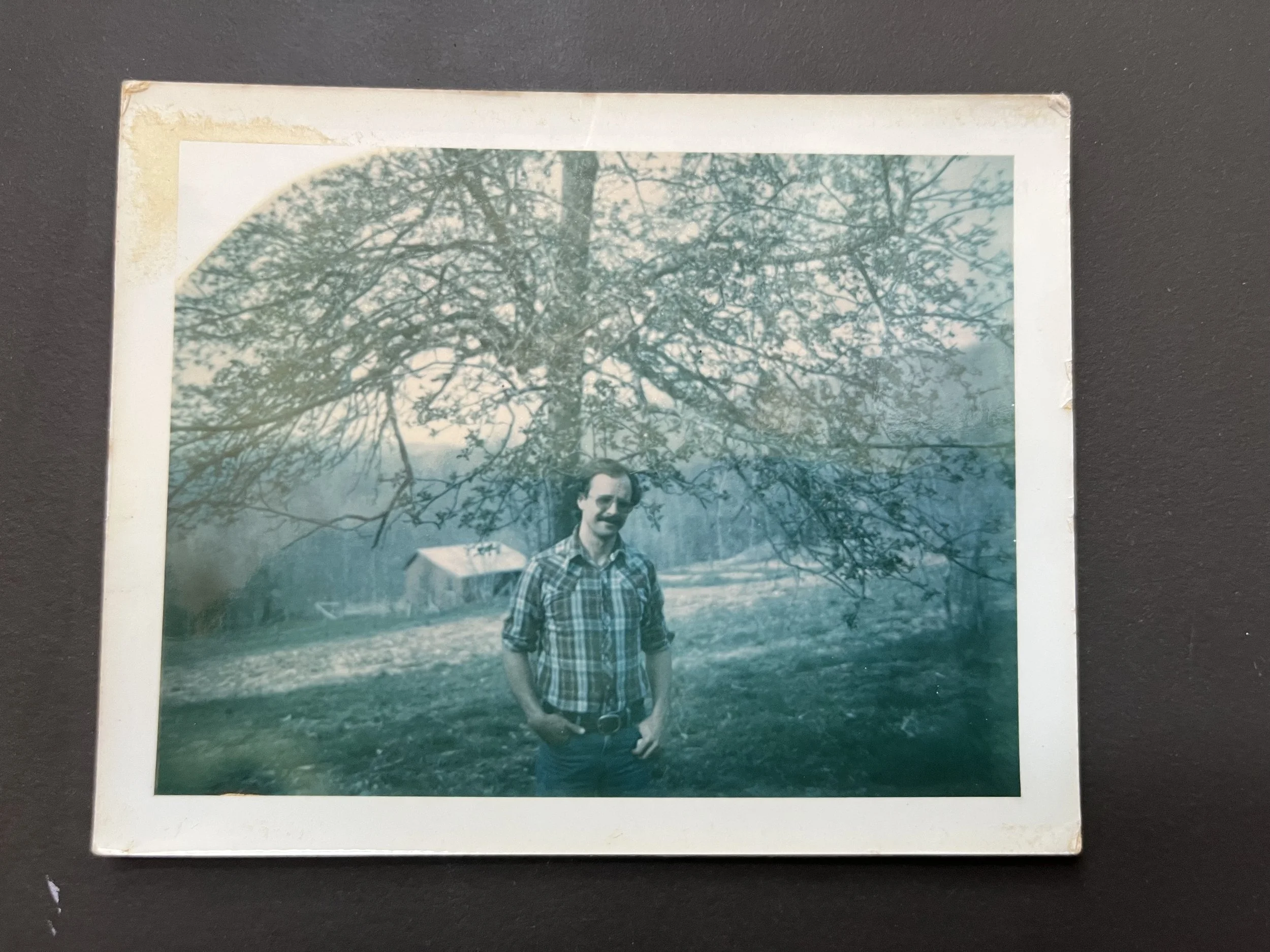
Doug on the farm circa ~1976.
In other news, on January 31st we celebrated 50 years of Waterfall Farm. Not 50 years of sugaring, but 50 years since Doug bought this land and began living his dream.
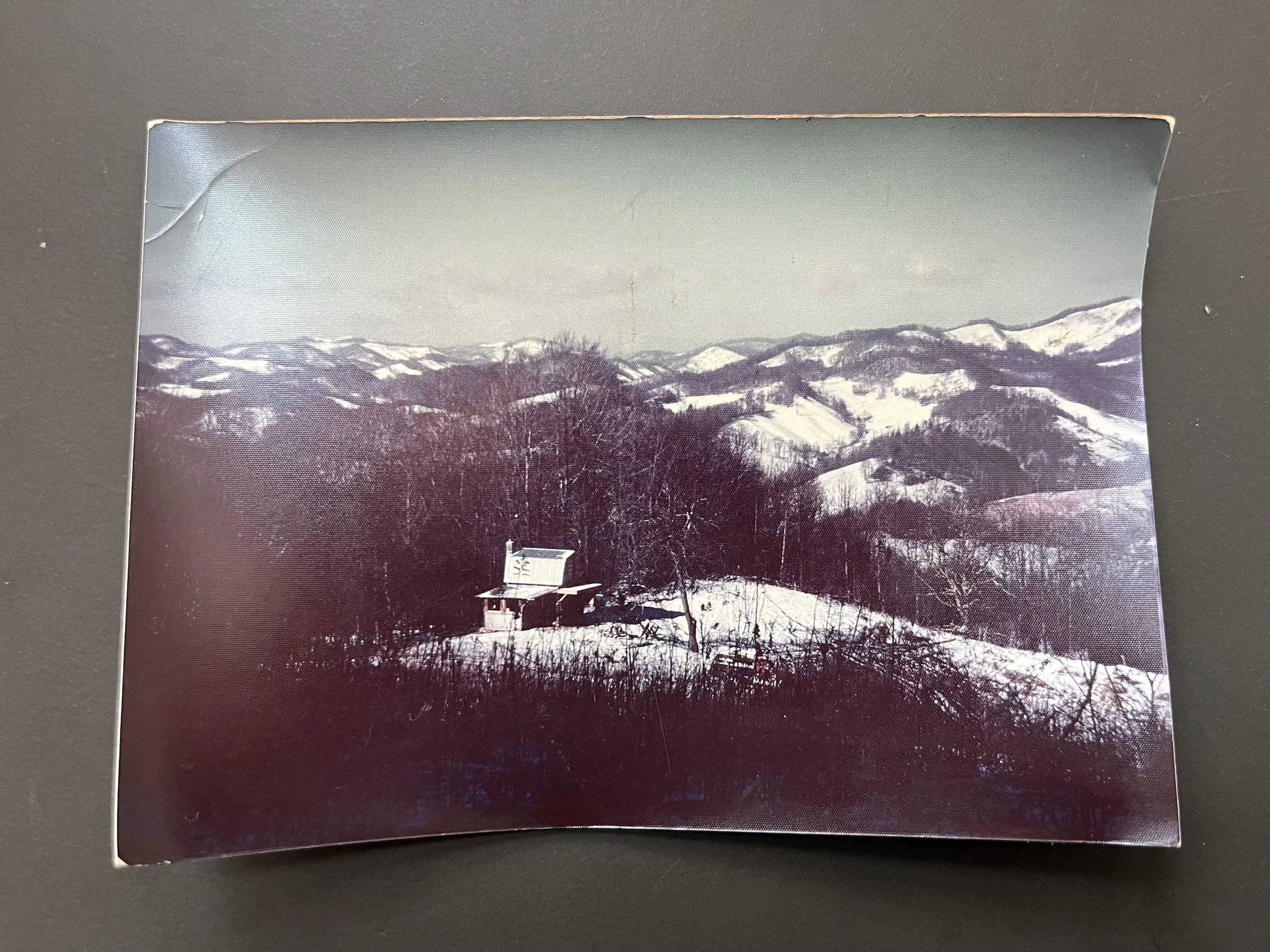
Doug’s original cabin on the farm.
When he first walked the property as a potential buyer, it was winter. He remembers being struck by the beauty — the waterfall and creek tinkling through the ravine, the long views looking north and west into Creston, and beyond to White Top and Pond Mountain in the distance. He noticed, too, the abundance of maple trees. As a child, his mother would put maple candy into his and his sisters’ Christmas stockings, and he felt warmed by the possibility that one day he might make maple syrup here.
At 26, he was in love with the land. His dream was to farm and to make himself a part of this place. He wasn’t attached to the how so much as the being and the doing. That openness led him through many permutations of farming over the years — zucchinis, Christmas trees, a nursery of ornamental landscape plants of conifers and Japanese maples. It would be 30 years before he tapped his first tree.
Doug’s friend Harry Beard, an avid hobby sugarer here in the county, encouraged Doug to begin tapping. In 2006, Doug set 10 taps in maple trees that bordered the field around his house. From that first taste of syrup, he was hooked.
The hobby slowly grew legs. In 2010, over the course of a week, he hosted what can only be described as a barn-raising. With the help of family and friends, the sugarhouse was built from poplar and locust harvested and milled right here on the farm. In 2012, Wheeler and Doug became business partners and officially began making syrup to sell in early 2013. That first year, we produced just 30 or 40 cases of syrup from a few hundred gravity taps.
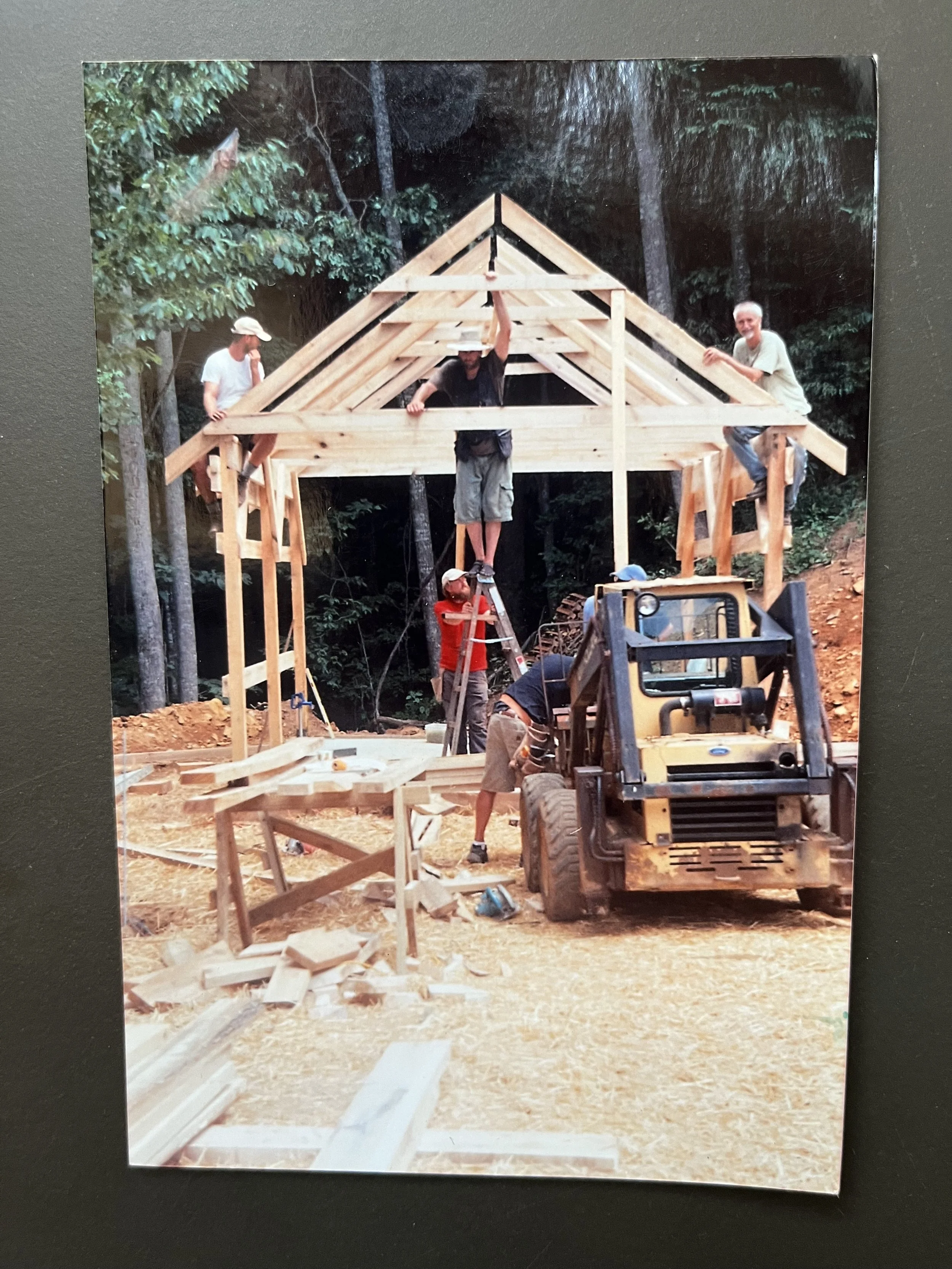
Family and friends came together to build the sugar house.
During those early years, our total naiveté as sugarers hovered somewhere between comedy and chaos. We had only the most basic equipment and a less-than-basic understanding of how it all worked. We were without peers as southern sugarers and had few places to turn for answers. Wheeler and Michael met in 2013, and Michael entered the maple picture in 2014. Over the years, we’ve learned many lessons the hard way and slowly acquired better, more efficient equipment.
By lucky chance — and generous spirit — we were mentored by Bruce Gillilan of Gillilan Family Maple in Vermont. Bruce has traveled to our farm many times, showing us best practices for running lines and building systems. In 2018, he was named to the North American Maple Hall of Fame for his lifetime of service to the maple industry. We’re grateful to Bruce.
Today, Michael and Wheeler run the business, with Doug still deeply involved. Through failures and successes, we’ve gained a steady handle on our operation — and yet every year remains an adventure as we navigate the unknowns and x-factors that keep us humble and guessing as farmers.
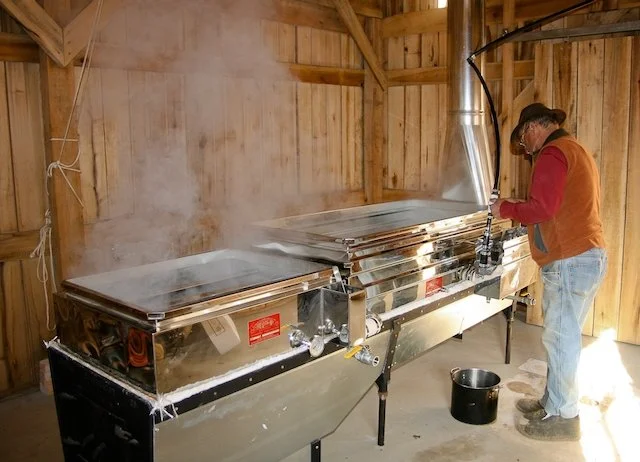
One of Doug’s first boils in the new sugar house, on the new evaporator in 2011.